
A World Designed For Us
By Tara Kola
From the ages of 10-21 years old, I attended a 3-week Bharatanatyam dance camp in Yogaville, Virginia almost every single year. It was my first time being surrounded by South Asian kids from so many walks of life, and from so many corners of the country that I could have never imagined - from rural Maine to New Jersey. For those 3 weeks, I danced Bharatanatyam 7 hours a day, and learned stories from mythology and history. I also made some of the best friends of my life, including my co-founder at The Banyan Tree, Nivetha, who was my roommate for multiple years. One day in dance camp, I remember I was walking out of yoga class surrounded by my friends, and I though to myself, “this moment, right now, is what pure happiness feels like - remember it.” I still remember it, and I return to that memory through every hard season of life.
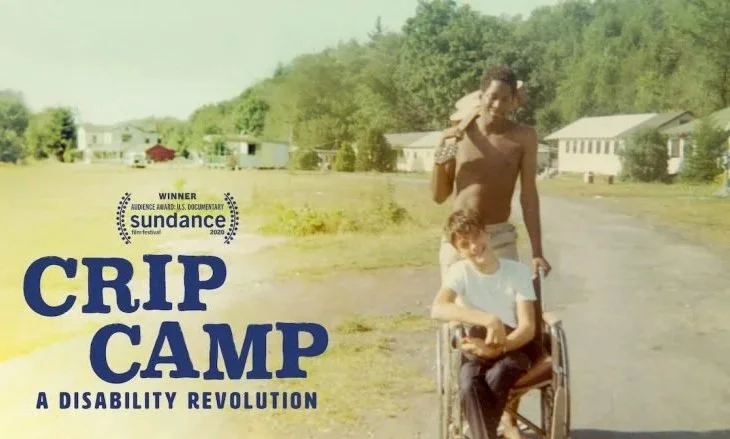
The documentary Crip Camp gave me a framework for understanding why spaces like this matter so profoundly. The documentary follows a summer camp for kids with disabilities in 1970s Woodstock. As the kids spend the summer playing baseball without hands, swimming with multiple sclerosis, and hiking without feet, you see them realize, for the first time, that this is what it feels like to be in a world designed for you. They also realize that the problem in the outside world isn’t them, because there are plenty of people like them. The problem is that the world hasn’t been designed for them, and that is by design. You watch as young kids like Judy Heumann and others who met at that camp, went on to lead the disability rights movement as adults, eventually helping bring the Americans with Disabilities Act (ADA) into existence. The bonds formed as kids in summer camp at Woodstock lasted a lifetime and changed the world. We believe the bonds formed at Camp Banyan will have that power too.
People often ask me, why does it even matter for South Asian kids in the Bay Area to have a space like The Banyan Tree, when they are surrounded by so many of their kind here? I can answer that easily, because I have my own experience as a brown kid growing up in the Bay Area to draw from. Though I grew up surrounded by South Asians in the Bay, the institution of school required us to spend the majority of our days code-switching, leaving behind home languages, and rejecting important parts of our identities for social survival. I remember once when I was 12 years old, we were watching a Bharatanatyam performance at a school dance showcase. Around half of my class was Indian, but the few white kids laughed and asked some of us if we danced like that. I said I didn’t dance Bharatanatyam, though of course I did, and in that lie was a deep erasure of my identity as a dancer. Camp was different.
Camp also had its challenges. As an adult, I strongly disapprove of some things I saw there - particularly around how young South Asian girls were mistreated and mistaught. But that is why it is so important that we create summer camps where young people can both be immersed in South Asian history and culture, but in a way that acknowledges there’s no singular way to be South Asian, man or woman, and certainly there is no fixed definition of “culture.” Culture is ever-evolving, and at Camp Banyan we seek to evolve it in the direction of equity and peace.
Just as the Disability Rights Movement was so deeply shaped by relationships built in a summer camp, just as The Banyan Tree was created through relationships made in a summer camp, we know the friendships and realizations that young people at Camp Banyan will bring home will stay with them — and help them imagine how to create more inclusive worlds beyond the summer.
