
Family History: The Herbal Shop of Ludhiana
By Sonali Bhandari
When I was a kid, I visited my maternal family’s medicine shop in Ludhiana, Punjab. I remember the way-too-fluorescent lights, the herbal powders on cabinets lined up all the way to the ceiling, and the smell of pollution and herbs mixing in the air. My mom greets her family in loud and punctuated Punjabi, which I had thought was just really happy Hindi up until that point. I learned that this shop had been created by my great-grandfather. It was called Sukh Sagar, meaning an ocean of peace.
My maternal grandfather grew up about in a village, about an hour’s cycle ride from Ludhiana. In 1947, when he was about 5 years old, the Partition took place. Punjab was being split. In their village, the Muslims were being murdered and rumors were spreading that the Hindus would be next. My great-grandfather decided it was time to go. He set off for Ludhiana, with the knowledge of herbal medicine he learned from his teachers and his own father. He set out to create his own business in the city. He took along with him three of his children, one of them being my grandfather, Bahadur.
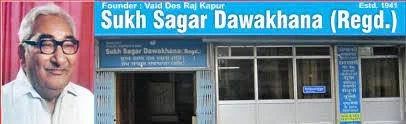
My great grandfather, Vaid Raj Kapur and the shop he started that our family still runs today.
My great-grandfather found a shop with a space right above for his family to stay. My grandfather would learn the stairs between the shop and their flat better than any book he read in school. When my great-grandfather needed someone to grind the herbs, go to the market, clean the pots, these tasks were always given to Bahadur. Every medicine that left Sukh Sagar passed through my grandfather’s hands.
My grandfather remembers these times fondly, it required a kind of dedication that I still see in him now. Growing up working at Sukh Sagar, he listened on those stairs to diagnoses taking place through hushed conversations. He saw people coming from all over India to receive help for every kind of ailments. Sukh Sagar became especially known for its medicine for skin diseases like vitiligo, which helped many women in Punjab. I believe that the values he learned at Sukh Sagar never left as he got his PhD from IIT Delhi, became a professor, and then came to America. He always had bottles of powders and decoctions, with long descriptions in Hindi sprawled on white papers taped to it for any health issue that may trouble anyone around him. He was devoted to relieving suffering.
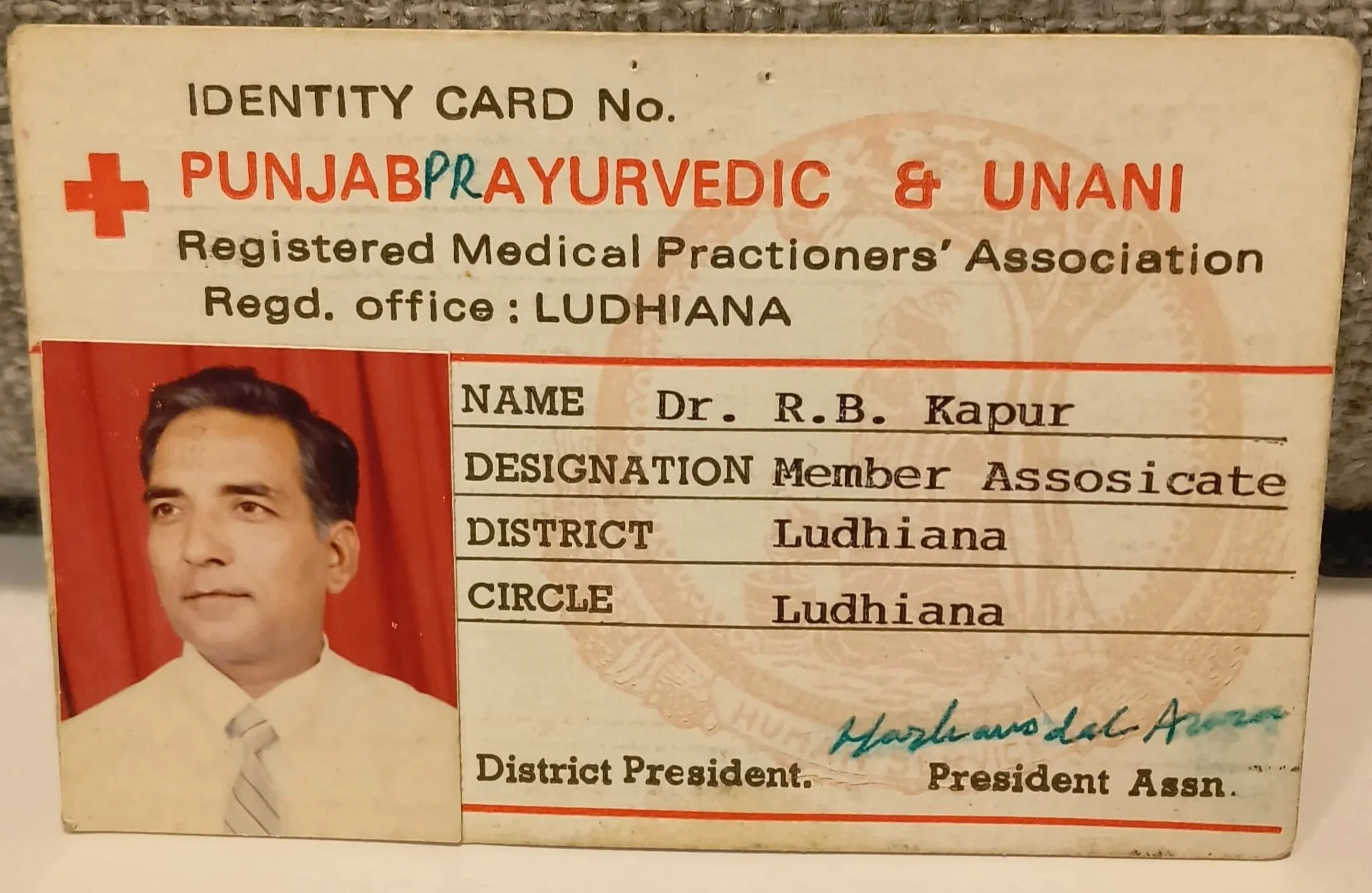
My grandfather, R.B. Kapur
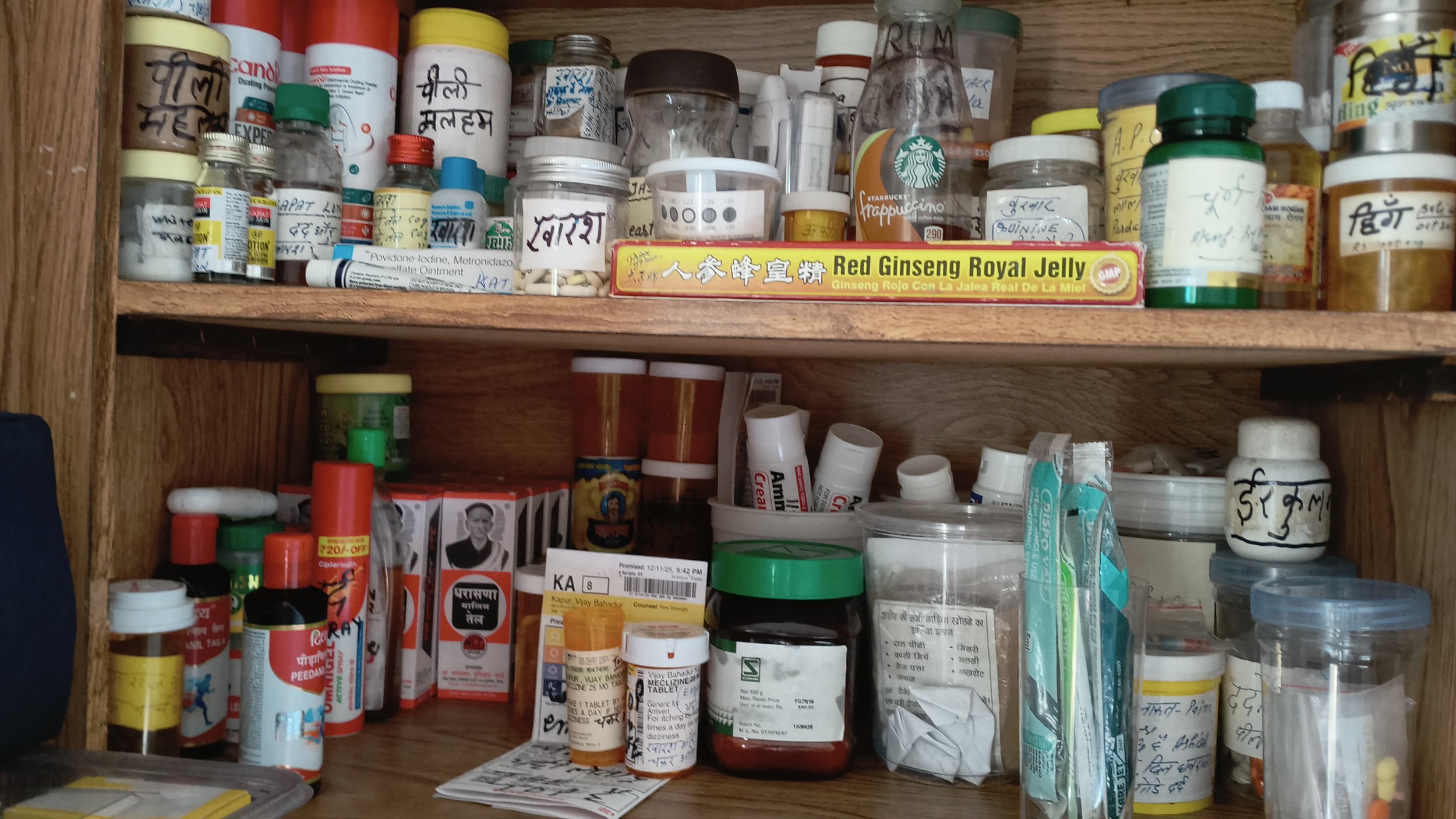
A small collection of herbal medicine brought from Sukh Sagar to my uncle’s cabinet in Southern California.
When I ask him today to teach me what he knows, he laughs and tells me I first need to work on my Punjabi before I can start. The language of herbs felt hard to translate to English. Still, I learn through conversations with those who visit him for help at the ashram he and my grandmother live at now in Rishikesh. Much like he did as a child, I listen on stairs, trying to catch on to anything that comes through. As I have grown up, the calling to learn the knowledge my family holds feels stronger. I hope to continue my family’s journey at The Banyan Tree, and help to create an ocean of peace, like Sukh Sagar.
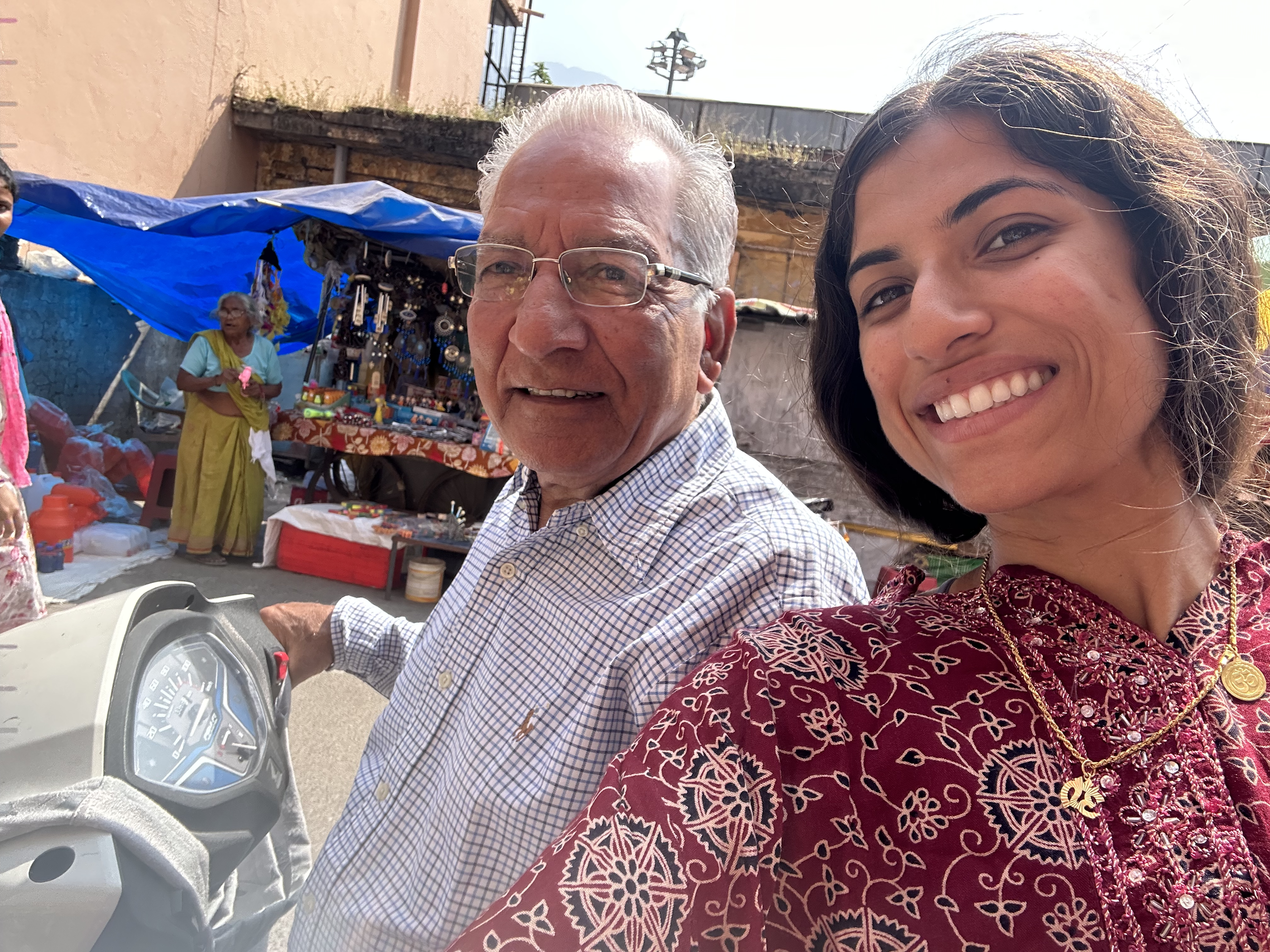
My grandfather and I in Rishikesh