
A Tribute to the Unibrow
The Banyan Tree’s curriculum on eyebrows.
“I don’t like my eyebrows.”
This was a statement we heard over and over again from our campers. But when our campers realized other South Asian girls felt the same way, and in fact that we adults had felt that way at their age too, they were shocked.
This is a story that repeats across generations. A South Asian girl, around eleven years old, sneaks into her parents' bathroom, finds a razor, and shaves the space between her eyebrows. She feels relief—and then dread when her family notices. A Gujarati woman who grew up in San Francisco in the 1950s told this exact story. Girls in our programs in the 2020s tell the same story. Three generations, same secret, same shame.
What is this inheritance we keep passing down?
The unibrow—those brows that meet in the middle—was not always a source of shame. In Persian poetry, connected brows were celebrated as abroo kamoon, the bow-like brow, compared to an archer's bow tensed to release an arrow. This wasn't a minor aesthetic preference; it was a marker of beauty, intelligence, and nobility. In Safavid and Qajar paintings, you can see women with their brows deliberately darkened and connected with vasmeh, a plant-based dye, to emphasize the line across their foreheads. In Indian miniature traditions—Mughal, Rajput, Kishangarhi—the arched continuous brow appears again and again as an idealized feature.
So what changed?
As European beauty standards became the measure of sophistication, features that had once marked refinement became signs of backwardness. The unibrow went from something women painted on to something girls secretly shaved off. What was once enhanced became something to erase.
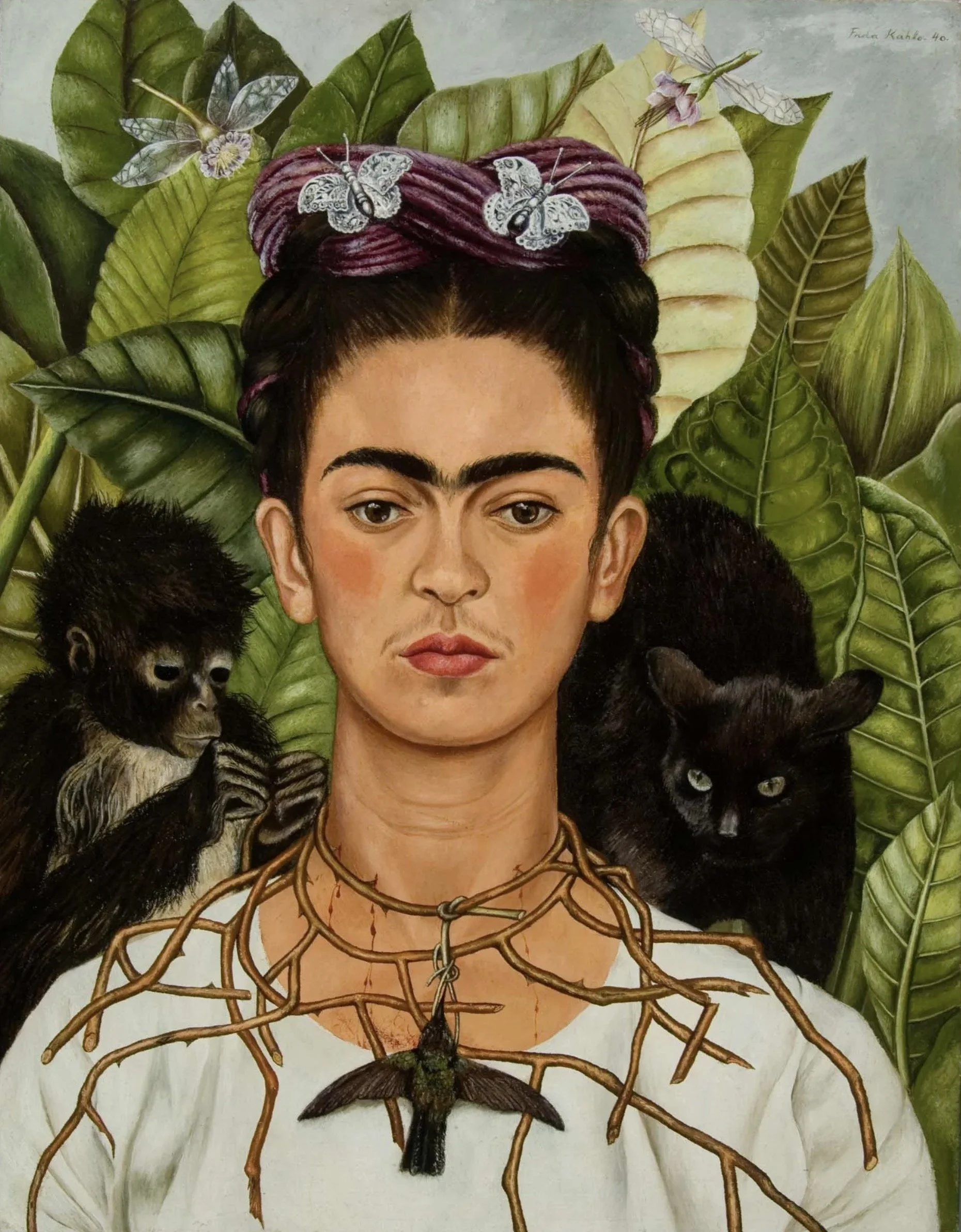
This is where Frida Kahlo comes in to save the day. Kahlo possesses one of the most famous unibrows in the world, one that all our Banyan Tree youth have come across at some point in their life.
Kahlo, the Mexican artist, is famous for many things: her surrealist self-portraits, her turbulent marriage to Diego Rivera, the chronic pain she transformed into art. But one of the most striking things about her work is her face—specifically, her unibrow and the faint mustache she never hid. In painting after painting, she rendered these features prominently, even defiantly.
Kahlo didn't keep her unibrow because she didn't notice it, or because she couldn't afford tweezers. She kept it because she rejected the idea that women should modify their bodies to meet someone else's standard of beauty. She painted, as she put it, "my own reality"—and that reality included the parts of herself that European beauty culture told women to hide.
For South Asian girls, Kahlo offers something powerful: a model of deliberate resistance. She shows that beauty standards are not natural or inevitable—they are choices, and they can be accepted or refused with intention. Her self-portraits are not acts of defiance for defiance's sake; they are acts of self-definition. She decided what was beautiful about her own face.
At The Banyan Tree, we introduce children to Kahlo's story and her work. We have them analyze her work in a gallery walk to learn her life story through her paintings, and come to terms with how they feel about her brows. We show them Persian miniatures and Mughal paintings where connected brows were the ideal. We ask them: How would you describe these brows? What changed from then to now? And most importantly: Who gets to decide what's beautiful about you?
Then we draw and paint.
Children create self-portraits in Kahlo's style, looking carefully in mirrors at their actual features—their real brow shape, their real skin tone, their real face. Some children have already removed hair from their brows; we ask them to imagine what their natural brow might look like. They add flowers, bright colors, the lush backgrounds Kahlo loved. The portraits are beautiful, every single time.
We don't tell children they must keep their natural brows. Bodily autonomy matters, and we won't replace one prescription with another. But we want any choice they make to come from knowledge, not shame. We want them to know that connected brows were once—and can still be—beautiful. We want them to understand that when they feel embarrassed about their eyebrows, they are feeling the weight of history, not the truth about their faces.
The eleven-year-old girl reaching for her father's razor deserves to know: there's nothing wrong with you. There's something wrong with what you've been taught to see.
Frida knew this. She picked up a paintbrush and showed herself as she was. Our children are learning to do the same.
If you wish to find lesson plans for this topic, and other curriculum resources, click the button below.